Daily reflection
Thursday September 17th, 2026: Leave room for disruption
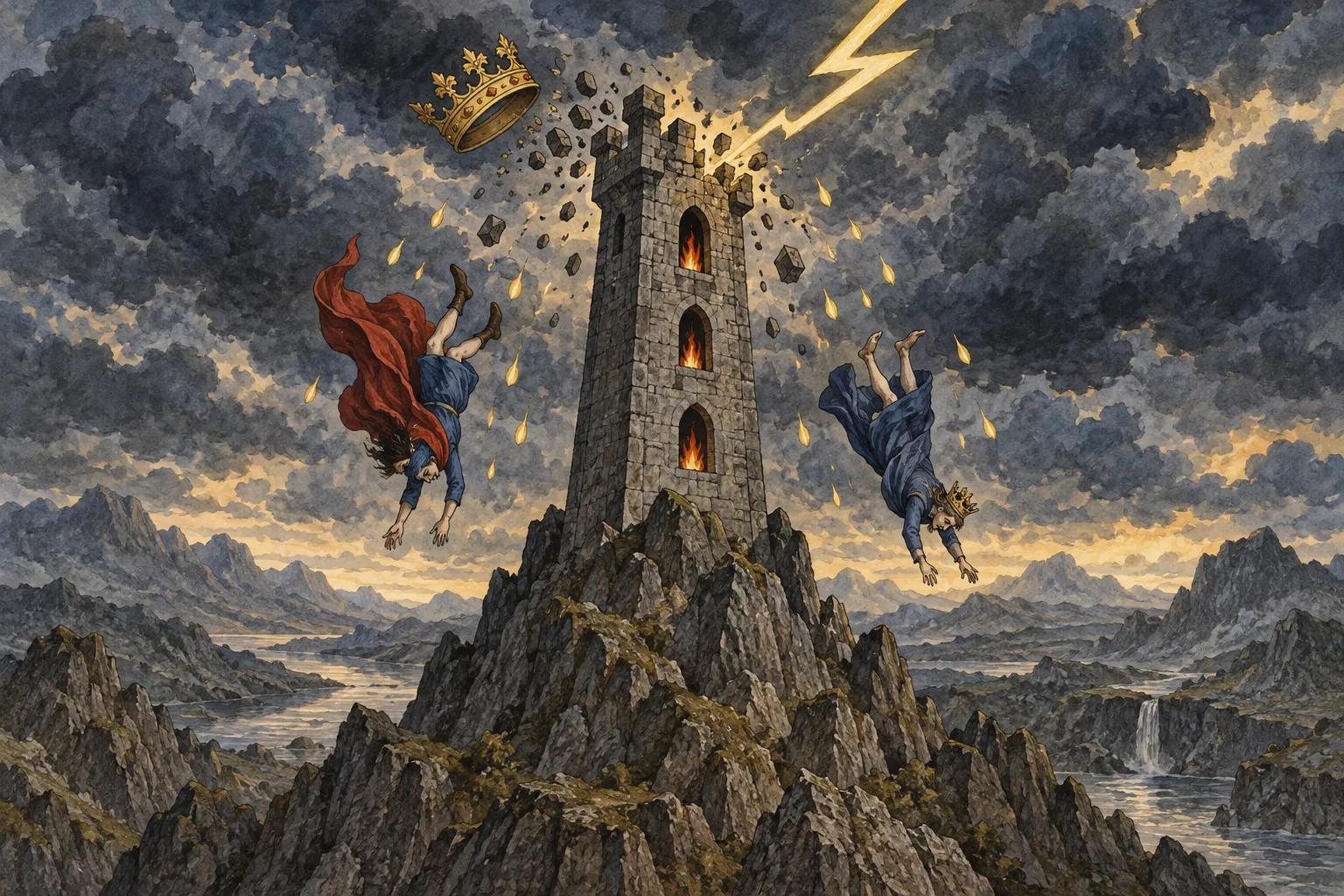
Cover accessibility description Visible scene A landscape illustration shows a tall grey stone tower on a jagged rocky peak. A golden zigzag lightning bolt enters from the upper right and strikes the broken top. A large golden crown floats above and to the left among scattered stones. Three vertically aligned arched windows contain orange flames. Two fully clothed figures fall head-first beside the tower: the left figure wears blue with a flowing red cloak; the right figure wears blue and a small gold crown. Their hands and feet remain visible. Golden flame-like drops surround them. Dark textured clouds part above distant mountains, winding water and a waterfall at the right. The palette combines slate blue, grey, muted gold and rust red. There is no lettering, border, signature or watermark. Symbolic interpretation The image recalls The Tower, the first card of the unchanged selected spread. Its interrupted structure supports reflection on disrupted plans; it does not predict catastrophe or imply that suffering is deserved. Provenance and display This is an AI-generated editorial illustration, not a historical card scan. Preserve its complete 3:2 composition rather than crop away the falling figures or displaced crown. The original PNG and generation evidence are retained separately.
The departure board changes while you are looking at it. Cancelled. A small word, with a whole afternoon folded inside. Today’s deliberately chosen spread explores the gap between a careful plan and an uncooperative world. These cards are reflective images, not forecasts: no disaster is being announced, and nobody is being tested by the universe.
The Tower
In the traditional image, lightning strikes The Tower and two figures fall from the building. There is nothing comfortable about the scene. A. E. Waite associates it with confusion and the breaking of false structures of thought. We can approach that symbolism without importing its scale into our day: sometimes what collapses is simply our certainty that an arrangement will hold.
The cancelled train is real; so are the fare, the missed connection and the person waiting at the other end. None becomes imaginary because we examine our expectations. But beneath the inconvenience there may be an additional demand: after all the trouble I took, this should not have happened. Planning helped you prepare. It could never make the railway owe you a frictionless afternoon.
Epictetus offers a wonderfully unglamorous preparation in Enchiridion, section 4, translated by Elizabeth Carter. In paraphrase: before visiting the baths, remember that bathers splash, jostle, insult and steal; intend both to bathe and to preserve your chosen manner of conduct. His example begins with knowing the place you are entering, not rehearsing an endless catalogue of catastrophes. Ordinary conditions deserve a place in ordinary plans.
Before your next appointment, identify one vulnerable dependency: transport, a password, somebody else’s availability. Give it one proportionate provision, such as saving the telephone number you would need. Then stop preparing. If disruption has already arrived, establish what happened before deciding what it means. The Tower need not become a lecture about your character. Sometimes the system failed, and the next useful thing is to find out whether anyone needs help.
The Chariot
The Chariot presents a very different figure: an upright charioteer with two sphinxes before him. Its traditional language includes conquest and triumph; Waite particularly discusses triumph of the mind. After the exposed, falling figures of the previous card, this image can feel reassuringly composed. Yet a victorious posture tells us little about whether the route ahead is actually open. Confidence is not a transport service.
Here is where determination can quietly become stubbornness. You refresh the same page, demand the same answer, insist on the journey you had already pictured. What was that journey for? To visit someone lonely, attend a consultation, deliver something essential? The purpose may survive the loss of the preferred route. Equally, a remote conversation may be no adequate substitute. Discernment includes noticing when an alternative really is worse.
Returning to Epictetus’s bath example, the practical distinction is between accomplishing the external errand and the conduct we bring to trying. That is an application of section 4, not a promise that conduct makes every loss bearable. You can pursue the appointment vigorously, ask for assistance and challenge poor service without making an employee absorb the entire force of your disappointment. Firmness and cruelty are different choices.
Write the purpose of the plan in a plain sentence. Then choose between a workable alternative, a revised time or an honest cancellation. If others are affected, consult them rather than announcing a rescue they never wanted. The useful resolve of The Chariot may be the willingness to abandon an elaborate workaround. Keeping a promise sometimes means admitting promptly that you cannot keep it in its original form.
Temperance
In Temperance, a winged figure pours between two cups, with one foot on earth and one on water. Waite’s account emphasises combining and harmonising; the familiar association with moderation belongs to this quieter register. The image gives us neither a shattered building nor a triumphal vehicle, but an ongoing adjustment. There is still something to attend to, even after the dramatic moment has passed.
Adjustment often happens through unremarkable physical things. Sit down before making the call. Drink some water. Check the actual arrival time instead of offering the optimistic one that will require a second apology. These acts will not erase a lost afternoon. They may, however, keep fatigue and haste from making the remaining decisions for you. A little practical care gives judgment somewhere steadier to work.
Our Stoic practice here is moderation in the response, not a demand for a moderate feeling. Anger may arrive before you can name it; disappointment may stay after the arrangements are repaired. You do not have to manufacture serenity to act considerately. Nor does acceptance require tolerating a dangerous situation. Seeking safety, assistance or redress can be precisely the responsible response to the facts in front of you.
Leave one small margin in the rest of today, if your circumstances allow it. When someone is waiting, give them a realistic update and room to change their own plans. Temperance brings the reading back to that shared world: your disruption has neighbours. A day that no longer follows the timetable may still contain an honest conversation, a sensible repair and a promise carefully remade.
Journaling prompt
Which part of my plan was useful preparation, and which part had become a demand for certainty? Describe one interruption without turning it into a verdict on the day. What purpose remains worth serving, and what realistic new agreement would respect everyone affected?